Posted by Team Armscor on May 18, 2017 1 Minute Read

As the firearm industry and its fans know, the Illinois Senate recently passed SB-1657, a bill that mandates state licensing for all Illinois gun dealers, as well as sets restrictions on Illinois residents to nine firearm transfers per year.
This bill has been linked back to firearm companies Springfield Armory and Rock River Arms, both based in the state of Illinois. Rock Island Armory is not one of those companies.
As a firearm and ammunition manufacturer, this is disheartening for the industry, and we here at Rock Island Armory continue to support our dealer network.
As a Filipino company with U.S. headquarters in Pahrump, Nevada,
we have no tie to the recent bill or ruling.
Despite the similarity in name, Rock Island Armory is not the same company as Rock River Arms, and the two entities have no association with one another. At Armscor-Rock Island Armory, we fully support the Second Amendment and will always have the backs of our dealer and distributor networks.

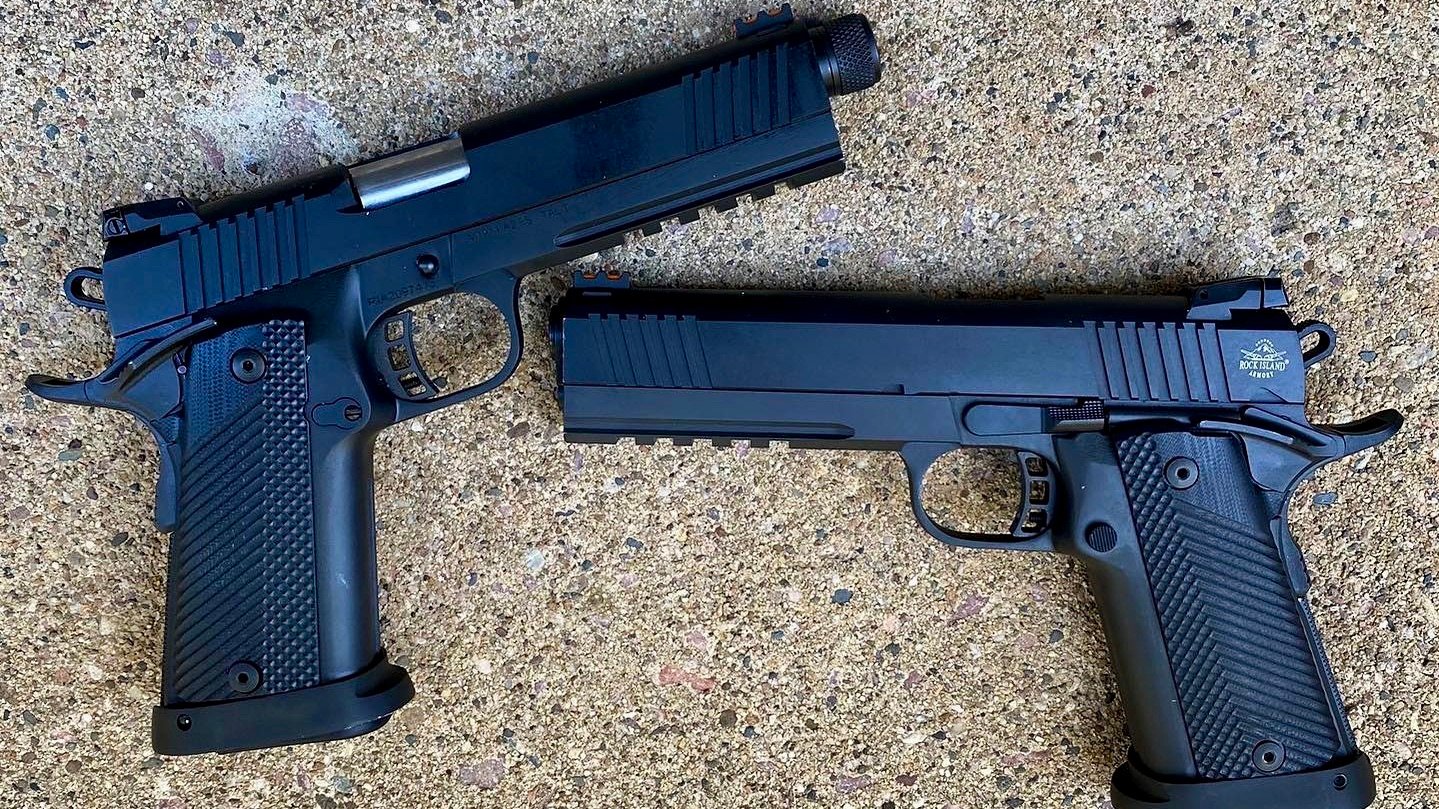
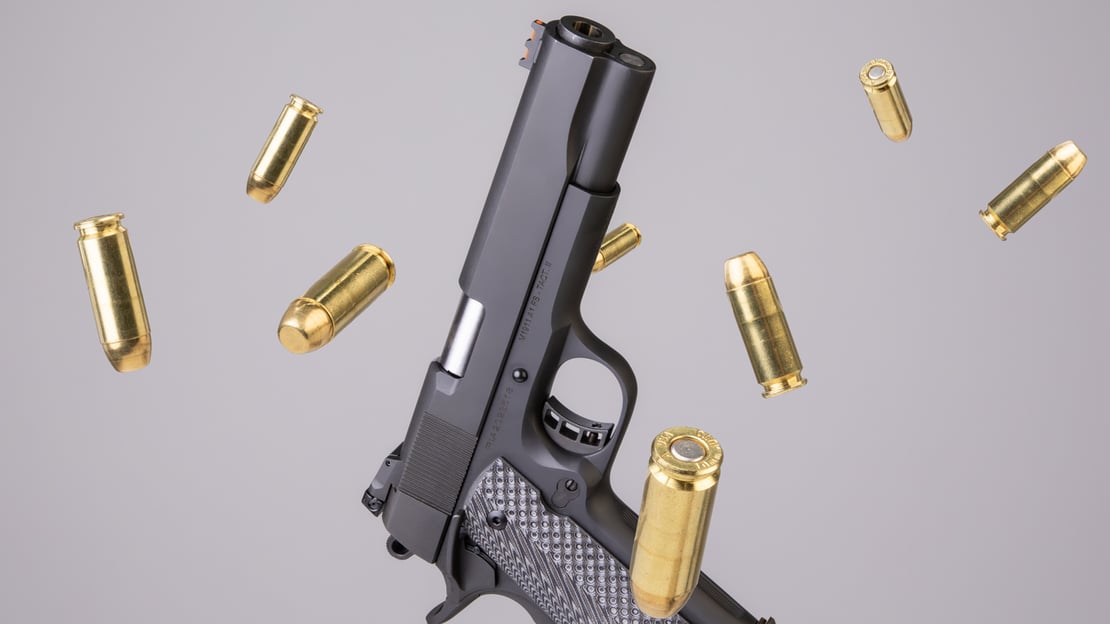
The 10mm auto ammo delivers more velocity, penetration and energy than 9mm and .45 ACP, without giving up much magazine capacity. Rock Island Armory builds one of the industry's deepest 10mm lineups, so the real question isn't whether 10mm is powerful. It's which model fits how you shoot.
This 10mm buyer's guide walks through the tradeoffs, the ballistics and the Rock Island 10mm options built to handle them.

Let’s break down firearm trigger actions.
Single action only (SAO) requires cocking the hammer before the trigger works. Double action/single action (DA/SA) has a long first pull that cocks the hammer, then lighter pulls after. Double action only (DAO) has no manual cocking; every pull is the same weight.
These terms describe hammer-fired guns specifically, a separate question from striker-fired vs. hammer-fired. Here's what each one means, with real examples from the Rock Island Armory and RIA-USA lineups.

Ask ten shooters whether they prefer a striker-fired pistol or a hammer-fired pistol, and you will get ten confident answers.
What’s actually the difference between the two firing types?
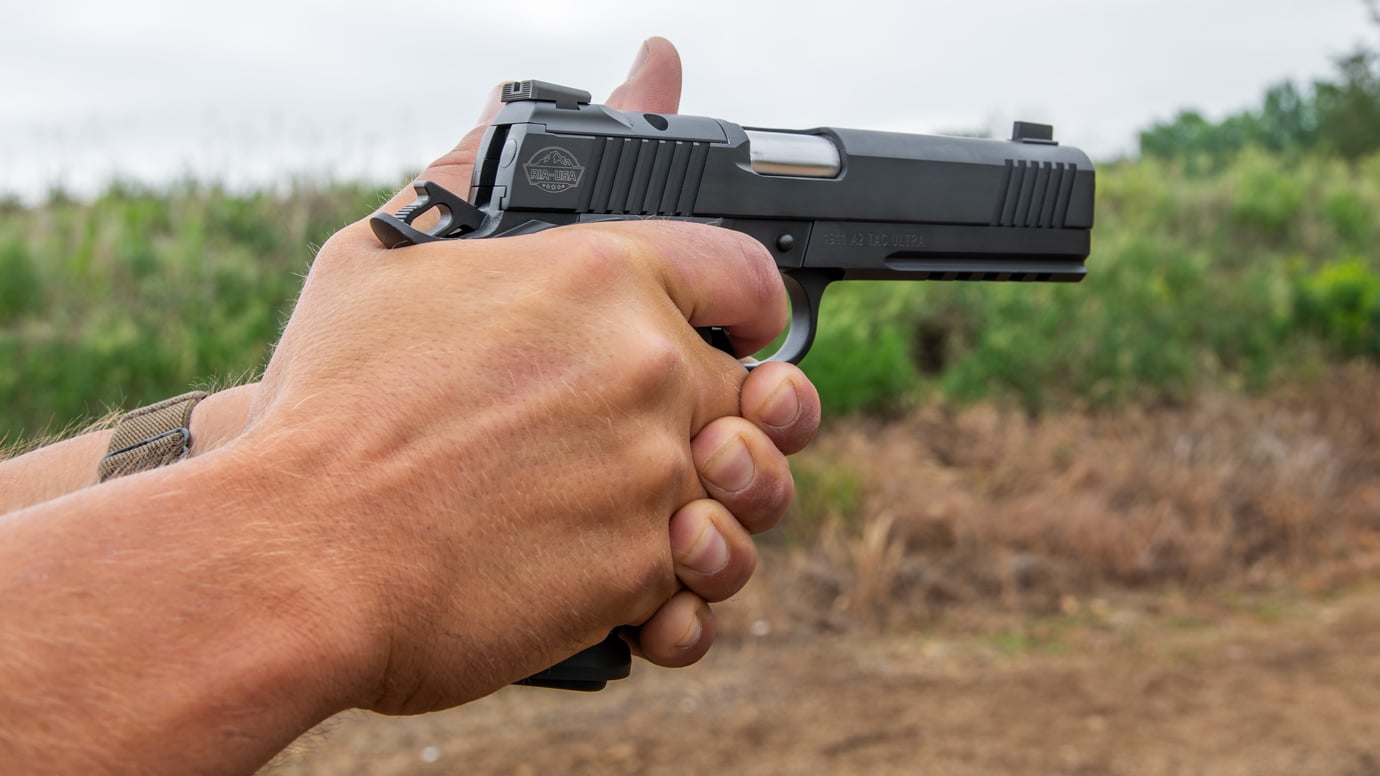
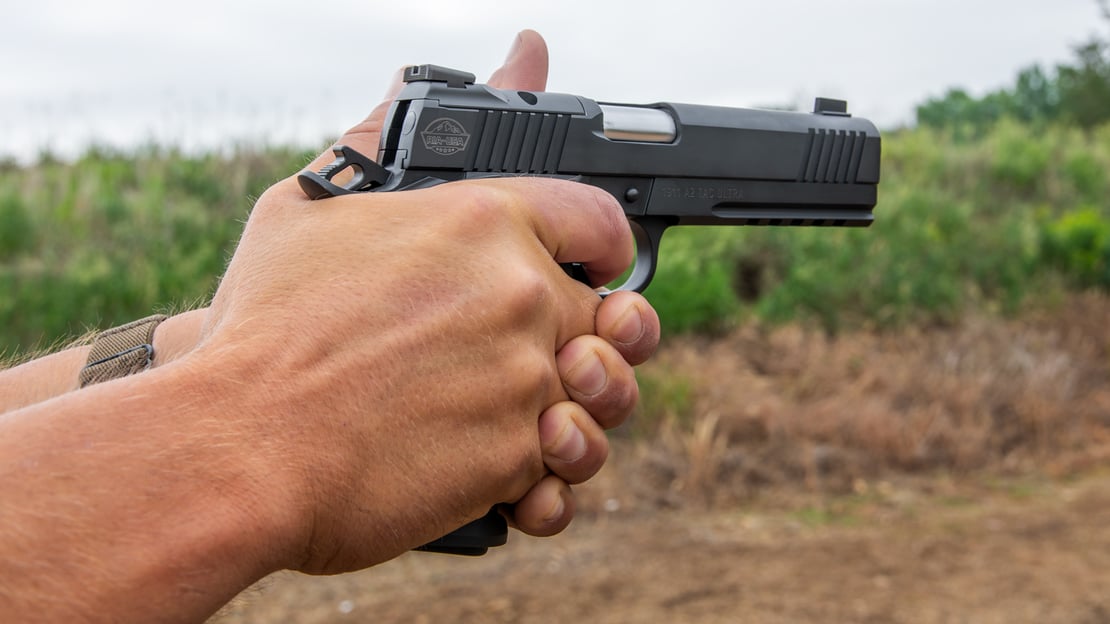
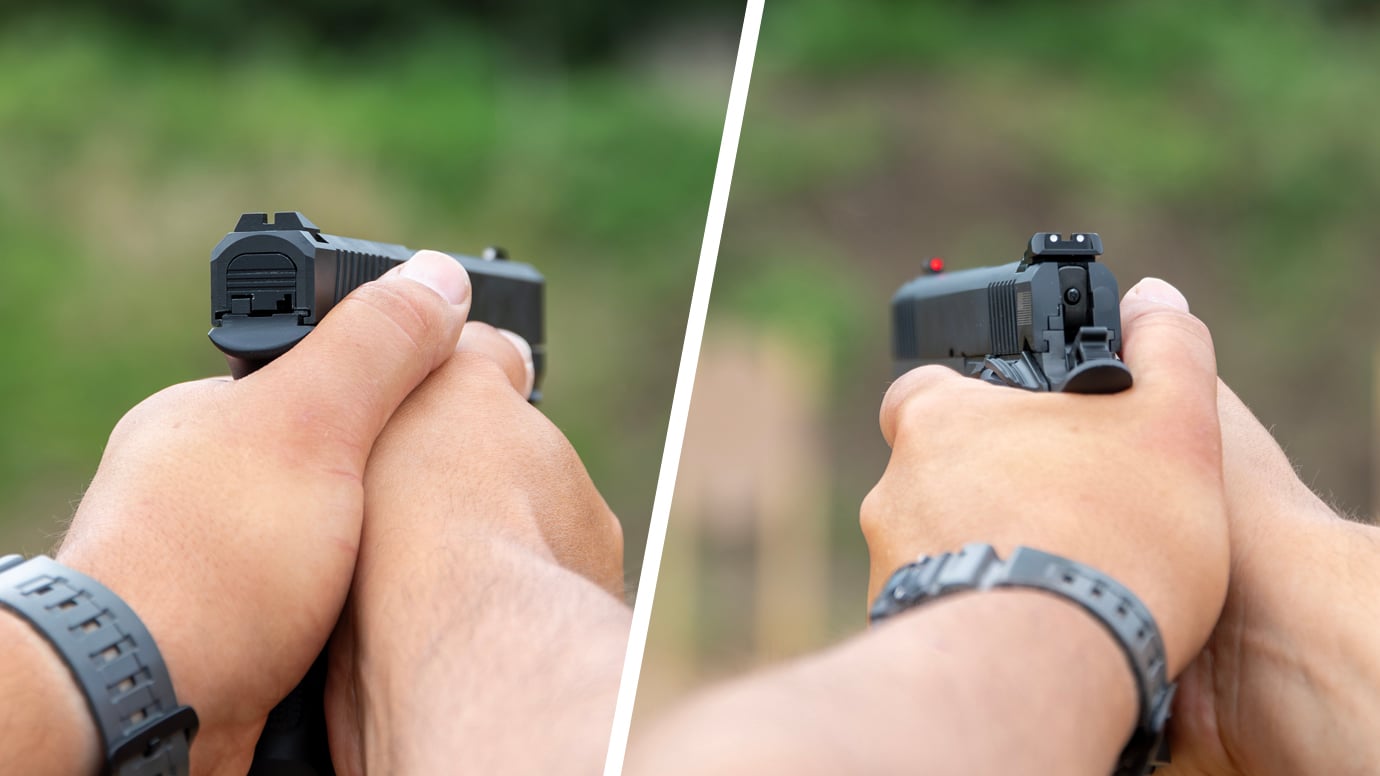
A striker-fired pistol uses an internal, spring-loaded striker to hit the primer of ammunition. A hammer-fired pistol uses a pivoting hammer that falls onto the firing pin, igniting the primer. The practical difference shows up in trigger feel, how ready the gun is to break the first shot, and firearm maintenance needs.
This choice is one of the first forks in the road when choosing a handgun, right up there with caliber and size. There is no universal winner in the striker-fired vs. hammer-fired debate, only the choice that fits how you shoot. Learn more with John McClain from Team Armscor.