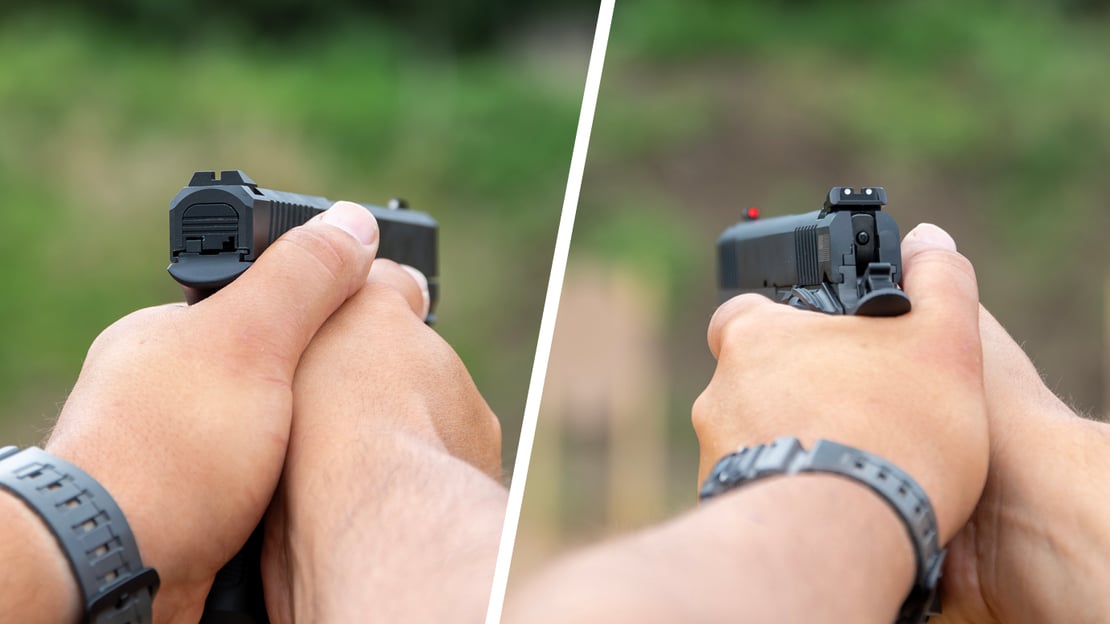
Let’s break down firearm trigger actions.
Single action only (SAO) requires cocking the hammer before the trigger works. Double action/single action (DA/SA) has a long first pull that cocks the hammer, then lighter pulls after. Double action only (DAO) has no manual cocking; every pull is the same weight.
These terms describe hammer-fired guns specifically, a separate question from striker-fired vs. hammer-fired. Here's what each one means, with real examples from the Rock Island Armory and RIA-USA lineups.
Single Action Only (SAO)
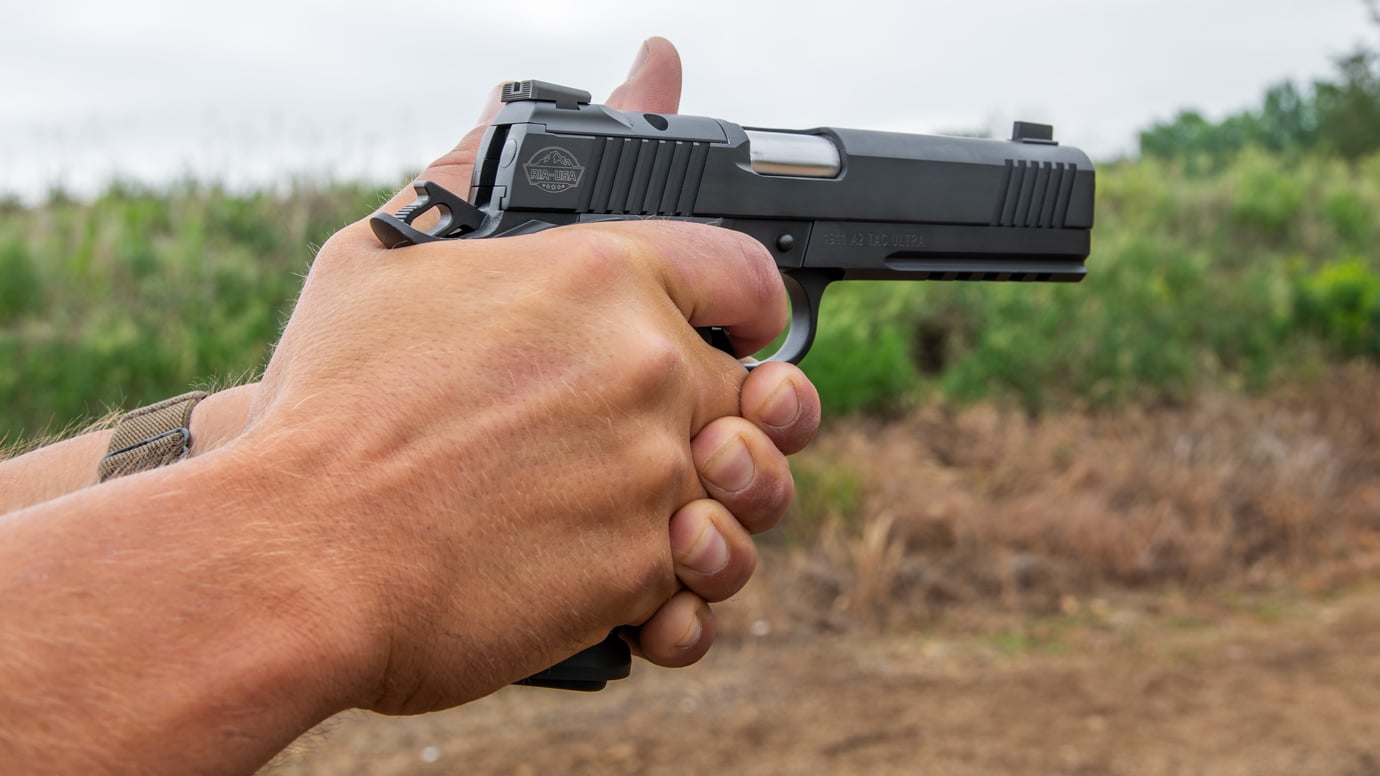
The hammer must be cocked before any shot breaks on any single-action-only firearm.
“If the hammer is already down and you pull the trigger, nothing happens,” explains John McClain, an in-house Rock Island Armory firearms expert.
That separation between trigger and hammer spring is why SAO pulls run a light, consistent 2 to 6 pounds, and why these guns typically carry a thumb safety.
That's true whether it's a single-action pistol like a 1911 or, less commonly today, a single-action revolver — the classic six-shooter where you cock the hammer by hand before every shot.
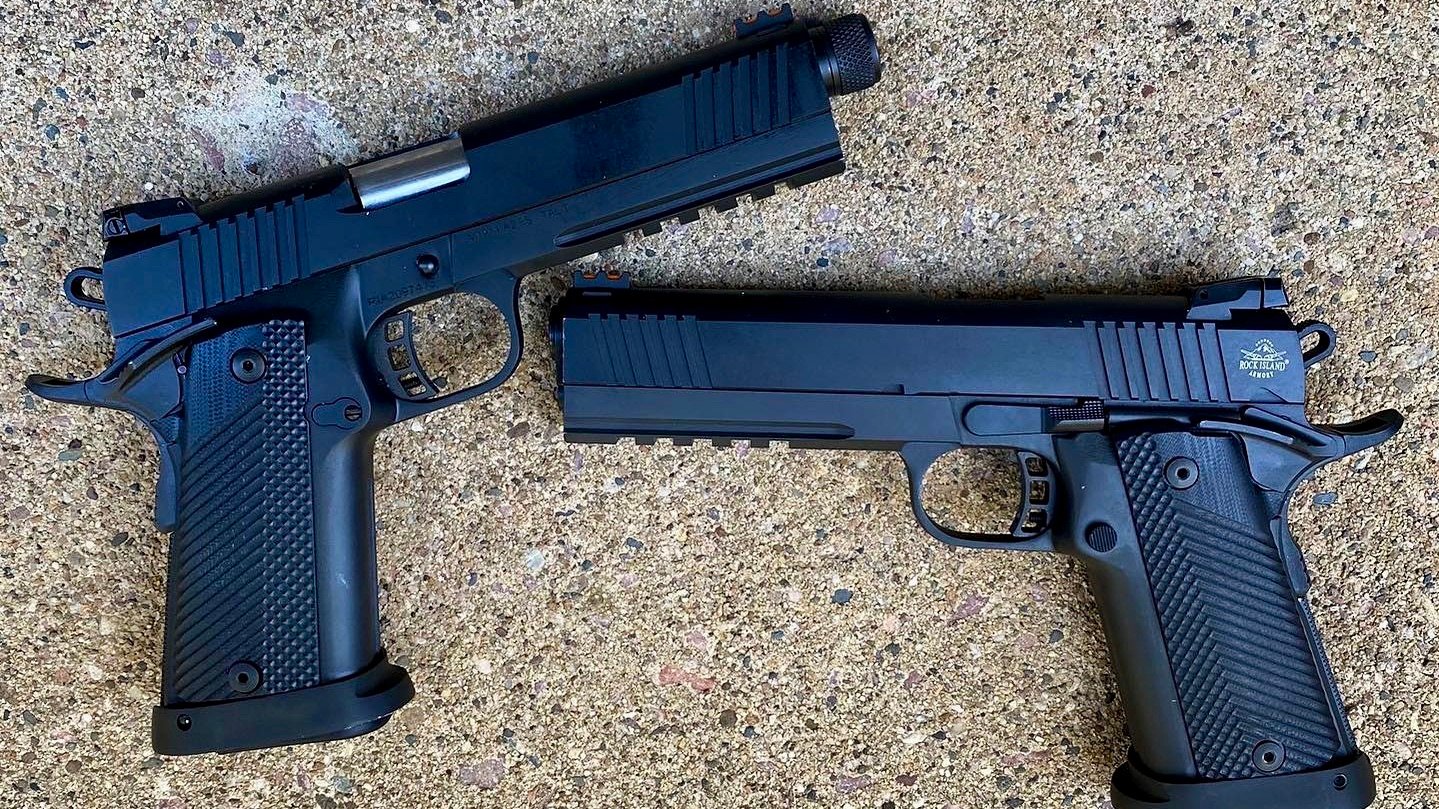
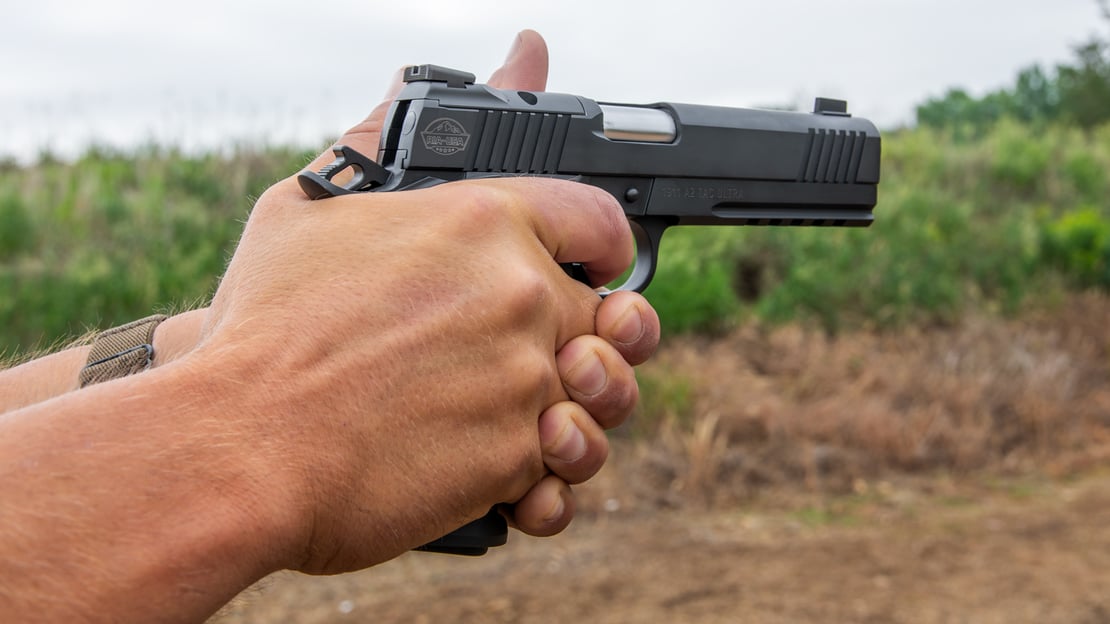
Examples: any 1911 (including RIA's Rock and TAC series), plus the RIA 5.0 and 5.0E, where the hammer is internal but functionally the same.
Double Action / Single Action (DA/SA)
Double-action/single-action firearms have two trigger feels in one gun. The first pull, roughly 10 to 12 pounds, cocks and drops the hammer. Every pull after is 5 to 6 pounds.
As John puts it, that first “long, heavy pull causes the hammer to come back... it drops, fires the round,” and the slide resets it for a lighter follow-up.
A double-action pistol works the same way, though RIA's own DA/SA lineup is revolvers rather than pistols.
Examples: M200 and M206 revolvers in .38 Special. The trade-off isn't safety, it's training two trigger weights instead of one.
Double Action Only (DAO)
Same pull weight (10 to 12 pounds) every time, with no way to cock the hammer manually. “We cut the hammer off of it so there's nothing to snag when you're doing your draw,” John says of RIA's M206 Spurless and Matte Nickel models.
No DAO revolver's trigger can be manually cocked, since there's no spur to grab — which is exactly the case with the M206 Spurless.
How to Tell Which One You Are Holding
Clear the gun first, then check the hammer (if there is one}:
-
Spurred, resting down: DA/SA — long first pull.
-
Cocked back or thumb safety visible: SAO — light, consistent pull.
-
No spur, no visible hammer: DAO — same pull every time.
Which One Should You Choose?
Which is safer, single action vs. double action?
Neither has an inherent edge. Reliability, training, and fit matter more than action type.
Which is the best choice for a first-time buyer?
No action type is better for a first-time buyer than another. It's all about preference. Choose single action only (SAO) or double action only (DAO) for consistency, or go for Double action/single action (DA/SA) if you're okay with more practice to master two trigger weights.
What are the Disadvantages of a double-action revolver?
The main disadvantage to a double-action revolver is the learning curve of two trigger feels in one gun. That means more training time, no additional safety or monetary cost.
The Bottom Line
No action type wins.
As John says, “each one probably also has its own separate fan... for the most part, you'll find guys that prefer one over any of the other two.”
Handle a single-action 1911 and a double-action revolver back-to-back to feel the difference at your local dealer to find yours.